02 · The record
The atmosphere keeps score.
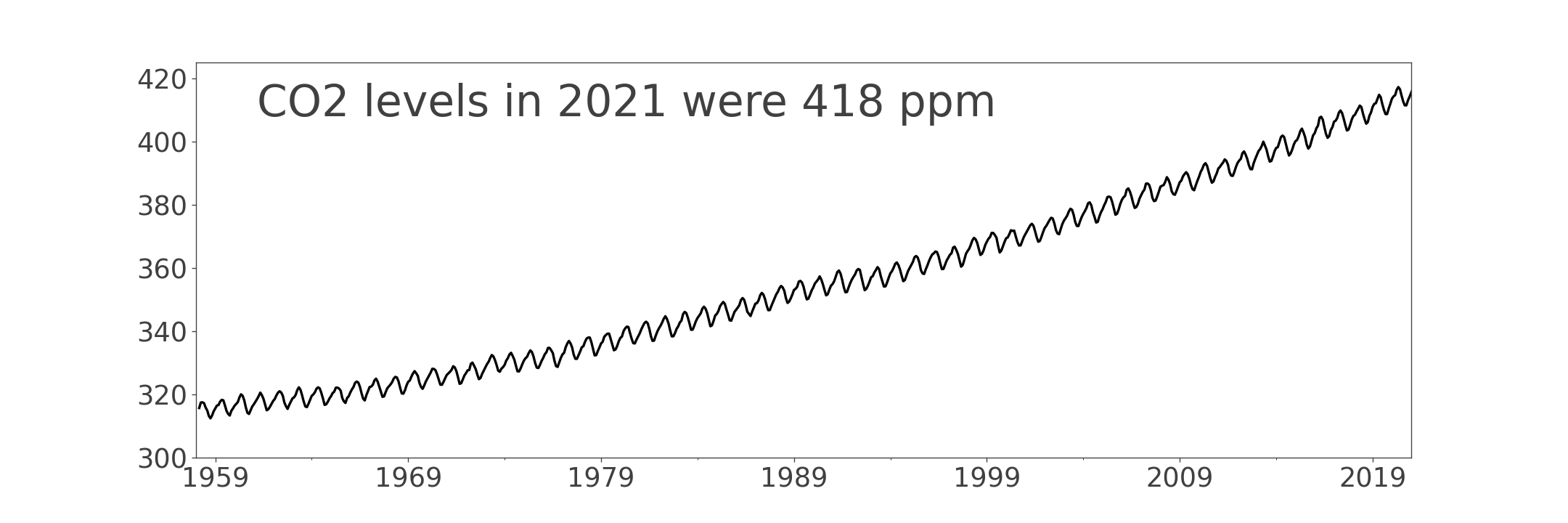
Measurements at Mauna Loa show the concentration of atmospheric CO₂ climbing steadily since observations began in 1958.
Tall Wood – Low Carbon · Story 01
Buildings sit at the center of the climate problem—which means the next generation of buildings can become part of the solution.
Scroll to follow the carbon
01 · The warning
“Global warming of 1.5°C and 2°C will be exceeded during the 21st century unless deep reductions in CO₂ and other greenhouse gas emissions occur in the coming decades.”
Intergovernmental Panel on Climate Change · Sixth Assessment Report · 2021
This was the most unequivocal and dire warning since the IPCC’s first report more than 30 years ago.
Our understanding of how greenhouse gases change the global climate continues to improve. How humanity will respond by limiting those emissions remains unknown.
Atmospheric CO₂ · Mauna Loa Observatory
02 · The record
Measurements at Mauna Loa show the concentration of atmospheric CO₂ climbing steadily since observations began in 1958.
More than
30%
The increase in atmospheric CO₂ concentration since 1958. The seasonal rhythm remains—but every year begins from a higher baseline.
03 · Buildings are a big part of the problem
39%
of global CO₂ emissions
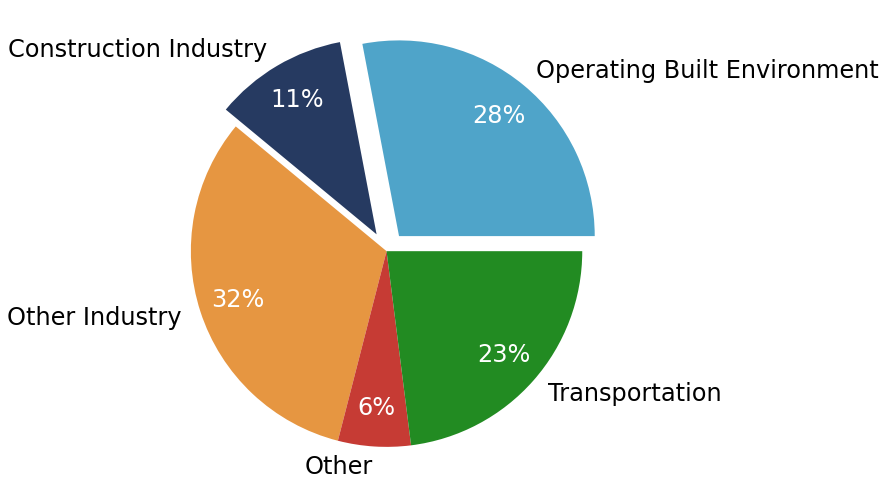
Globally, the built environment is directly and indirectly responsible for around 39% of carbon dioxide emissions.
28%
Energy-related emissions from operating the world’s existing buildings—some built this year, others more than a century ago.
11%
Emissions from extracting, refining, manufacturing and transporting materials, plus the construction process itself.
04 · Carbon and buildings
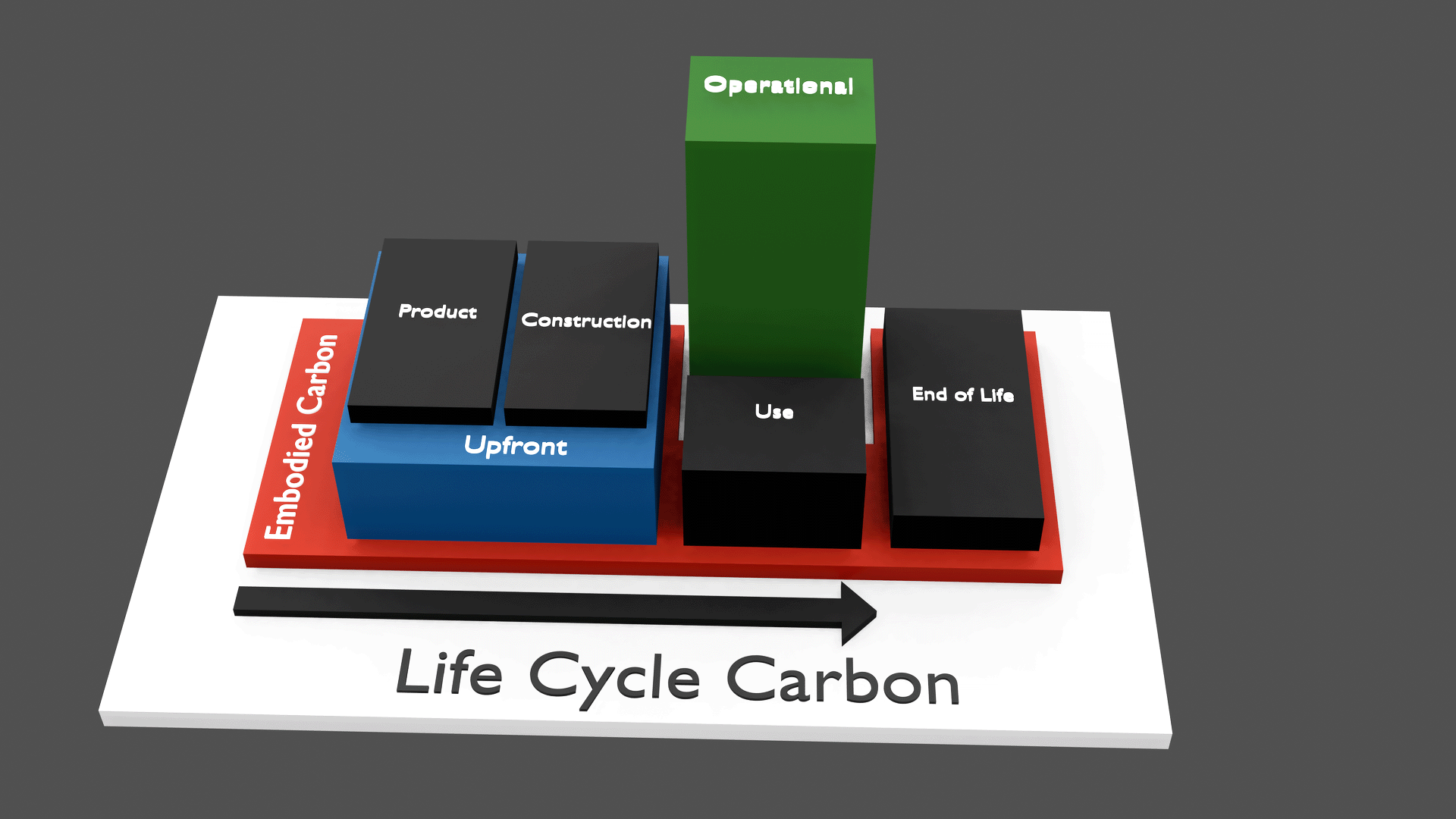
Life cycle assessment—LCA—is the framework used to understand the environmental impacts of products, processes and services, including buildings. It follows those impacts from raw material extraction through construction, use and end of life.
During use
Emissions from the energy used to operate a building throughout its life.
Beyond energy
All emissions from the product stage through end of life, excluding operational energy.
Released now
The emissions released before the building opens—from materials, transport and construction.
The climate impact of a building is not one number.
It is a timeline.
The next question is what happens to that timeline as the electrical grid becomes cleaner.